When Your Vehicle Sinks Into the Sand: Why a Desert Pullout Requires More Than a Tow
Driving in the UAE often means encounters with the sand. Whether you are a seasoned resident or a visitor exploring the dunes near Abu Dhabi, the risk of a desert pullout situation is real. It is not just about getting stuck. It is about understanding the environment, knowing the limits of your vehicle, and realizing that a standard tow truck might not be enough.
I have spent years working in vehicle recovery across the Emirates, from the highways of Sheikh Zayed Road to the soft sands of Al Ain. One thing I have learned is that a desert pullout is a completely different beast compared to a breakdown on asphalt. It requires specialized equipment, a deep understanding of sand dynamics, and a calm approach. Here is what you need to know.
What Is a Desert Pullout, Really?
A desert pullout refers to the process of extracting a vehicle that has become stuck in sand or soft terrain. This is not the same as towing a car with a flat tire or a dead battery. The sand creates suction around the wheels and chassis, and the more you try to accelerate out, the deeper you sink. I have seen 4x4s with high clearance buried up to their axles because the driver panicked and gunned the engine.
The first step in any successful desert pullout is to stop. Turn off the engine if you are stuck. Attempting to drive out only worsens the situation. Then, assess your surroundings. Are you on a steep dune? Is the sand soft and powdery? These factors determine the recovery method. A flatbed tow truck might work on a compacted gravel road, but in deep sand, you need a heavy duty recovery vehicle with a winch and a long cable.
The Right Equipment for the Job
Standard towing services often lack the gear for a proper desert pullout. A typical tow truck uses a wheel lift or a hook, which can damage the undercarriage of a car stuck in sand. What you need is a flatbed tow truck or a specialized recovery truck that can approach the vehicle from a safe angle, use a winch with a long cable, and pull the vehicle out without causing further damage.
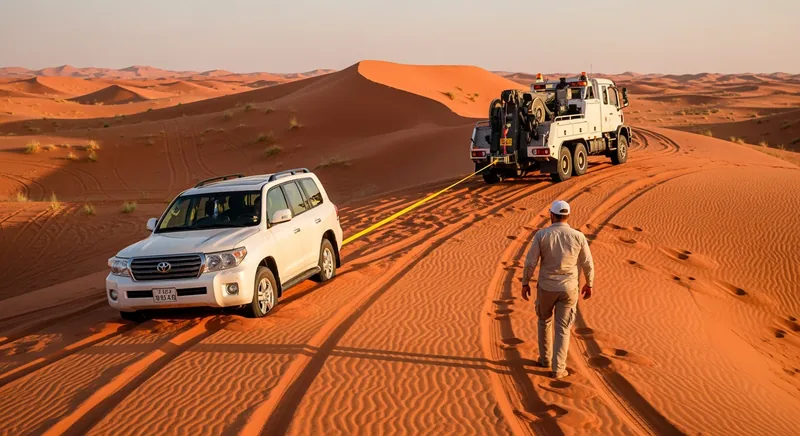
In my experience, the best recovery trucks for desert pullouts are those equipped with a powerful winch, sand anchors, and recovery boards. The operator must know how to attach the cable to the vehicle's frame or tow points, not the suspension or the exhaust. A single mistake can tear a bumper off or snap a drive shaft. That is why I always recommend calling a service that offers heavy duty recovery and 24/7 service, especially if you are stuck after dark.
Common Scenarios That Lead to a Desert Pullout
Most people assume that only off-roaders get stuck in the desert. That is not true. I have responded to calls on the edges of Sharjah and Ras Al Khaimah where drivers took a wrong turn on a paved road and ended up in a soft shoulder. Others have parked on what looked like hard sand near a beach, only to return and find the tide has softened the ground. Here are a few typical cases:
- Driving into a sandy parking area that looks solid but is actually loose sand.
- Pulling off the road to let another vehicle pass and sinking into the shoulder.
- Taking a shortcut across a patch of sand between two paved roads.
- Off-roading without proper recovery gear or experience.
- Parking on sand near a dune that shifts overnight.
In each case, the driver usually calls for a towing service expecting a quick hookup. But when the tow truck arrives and finds the vehicle buried, they realize they need a desert pullout specialist. That is why it helps to know the difference before you call.
Safety First: What to Do While Waiting for Help
Waiting for a desert pullout can take time, especially if you are far from the city. During that wait, your priority should be safety. If you are on a dune or near a slope, stay inside the vehicle or move to a safe distance. Keep your seatbelt on if you stay inside. Do not try to dig the vehicle out yourself unless you have recovery boards and know how to use them.
Also, consider the heat. In summer, temperatures inside a parked car can rise quickly. Roll down the windows slightly for ventilation, but keep the doors closed. If you have water, drink it. Dehydration is a real risk in the desert. I have seen people collapse from heat exhaustion while waiting for a tow. Always carry extra water and a phone charger. And remember, a battery jump start or fuel delivery might get you moving if the issue is not traction, but if you are stuck in sand, you need a pullout.
The Role of UAE Traffic Laws and Dubai Police
UAE traffic laws are strict about road safety, and they apply even off-road. If you cause an accident or block a road while trying to free yourself, you could face fines. I have seen cases where drivers attempted their own desert pullout, damaged their vehicle, and then called for help, only to find that the police required a report before the recovery could proceed. Dubai Police and other local authorities often need to know that the recovery is done safely and without endangering other road users.
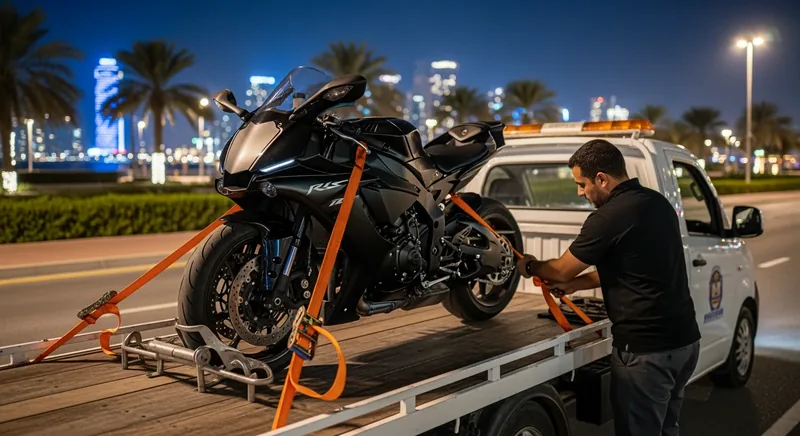
If you are stuck on a main road like Sheikh Zayed Road or near a busy intersection, call for emergency roadside assistance immediately. Do not try to drive out if you are blocking traffic. The police will often clear the area and coordinate with the recovery service to ensure a safe pullout. In some cases, they will close a lane to give the tow truck room to work.
Why You Should Not Attempt a DIY Desert Pullout
I have seen too many DIY desert pullouts go wrong. People use ropes tied to the bumper, or they attach a tow strap to a tree or a rock. In the desert, there are no trees. Some drivers try using a second vehicle to pull out the stuck one, but without proper equipment, the second vehicle often gets stuck too. Then you have two vehicles buried in the sand, and the recovery becomes twice as complicated.
A professional desert pullout uses a winch anchored to a heavy vehicle or a sand anchor. The operator knows how to tension the line and drive the stuck vehicle out slowly, avoiding jerks that can snap the cable. They also check the vehicle for damage after the pullout, ensuring the brakes, tires, and suspension are safe to drive. This level of care is what separates a standard towing service from a true recovery expert.
After the Pullout: What Comes Next
Once your vehicle is free, the work is not over. Sand can get into the brakes, the wheel bearings, and the engine bay. If you were stuck for a long time, the battery might be dead or the alternator could be strained. Some recovery services offer on-site repair, such as a battery jump start or a tire change, to get you back on the road. Others will tow your vehicle to a garage in Dubai, Abu Dhabi, or Al Ain for a thorough inspection.
I always advise drivers to have their vehicle checked after a desert pullout, even if it seems fine. Sand can cause premature wear on moving parts. A single grain in a brake caliper can lead to a squeal or worse. And if the engine overheated while you were trying to escape, the cooling system might need attention. A good recovery service will note these potential issues and give you a report to take to a mechanic.
Preparing for the Future: Avoiding the Next Desert Pullout
Prevention is better than cure. If you plan to drive near sand dunes or on unpaved roads, equip your vehicle with a recovery kit. This includes a shovel, recovery boards, a tow strap, and a tire pressure gauge. Lowering tire pressure can give you more traction on sand. But even with preparation, mistakes happen. The desert is unpredictable. Sand shifts, dunes collapse, and roads that were solid yesterday might be soft today.

That is why knowing a reliable 24/7 service that specializes in desert pullout recovery is essential. Keep their number in your phone. When you call, tell them exactly where you are and what kind of ground you are on. If you are near a landmark like a dune or a camel farm, mention it. The more details you give, the faster they can reach you. And if you are in a remote area, stay with your vehicle. It is easier to spot than a person walking in the desert.
In conclusion, a desert pullout is not just a tow. It is a specialized rescue that requires the right equipment, experience, and a focus on safety. Whether you are driving a sedan on the outskirts of Sharjah or a 4x4 in the deep dunes near Ras Al Khaimah, understanding what a desert pullout involves can save you time, money, and stress. Next time you head out, think about the ground beneath your wheels. It might be softer than you think.
Ends · DESERTPULLOUTHOUSE